27 October up until 25 April
The Eriskay Connection
More than a book

27 October up until 25 April
More than a book
Why do art and books go so well together? The Eriskay Connection proves just that. Each exhibition focuses on a single book. The featured publication changes four times during the exhibition period. Curious to know what’s on display right now? Then keep an eye on this page!
The Eriskay Connection is a Dutch book design studio and independent publisher. Working closely with authors, it creates books as standalone works that offer new insights into the world around us. The Eriskay Connection focuses on contemporary stories and explores the intersection of photography, art, research and writing. The publishing house excels at conveying the essence of a story through high-quality editing, design and production.
The Eriskay Connection has received numerous nominations in Dutch and international book design competitions: from Best Dutch Book Designs to the Aperture Awards for Best Photo Book. Since its foundation in 2011, it has exhibited at fairs in Tokyo, New York, Los Angeles and Paris. Now they are seeking the limelight closer to home: with a small exhibition just a stone’s throw away, at the Stedelijk Museum Breda.
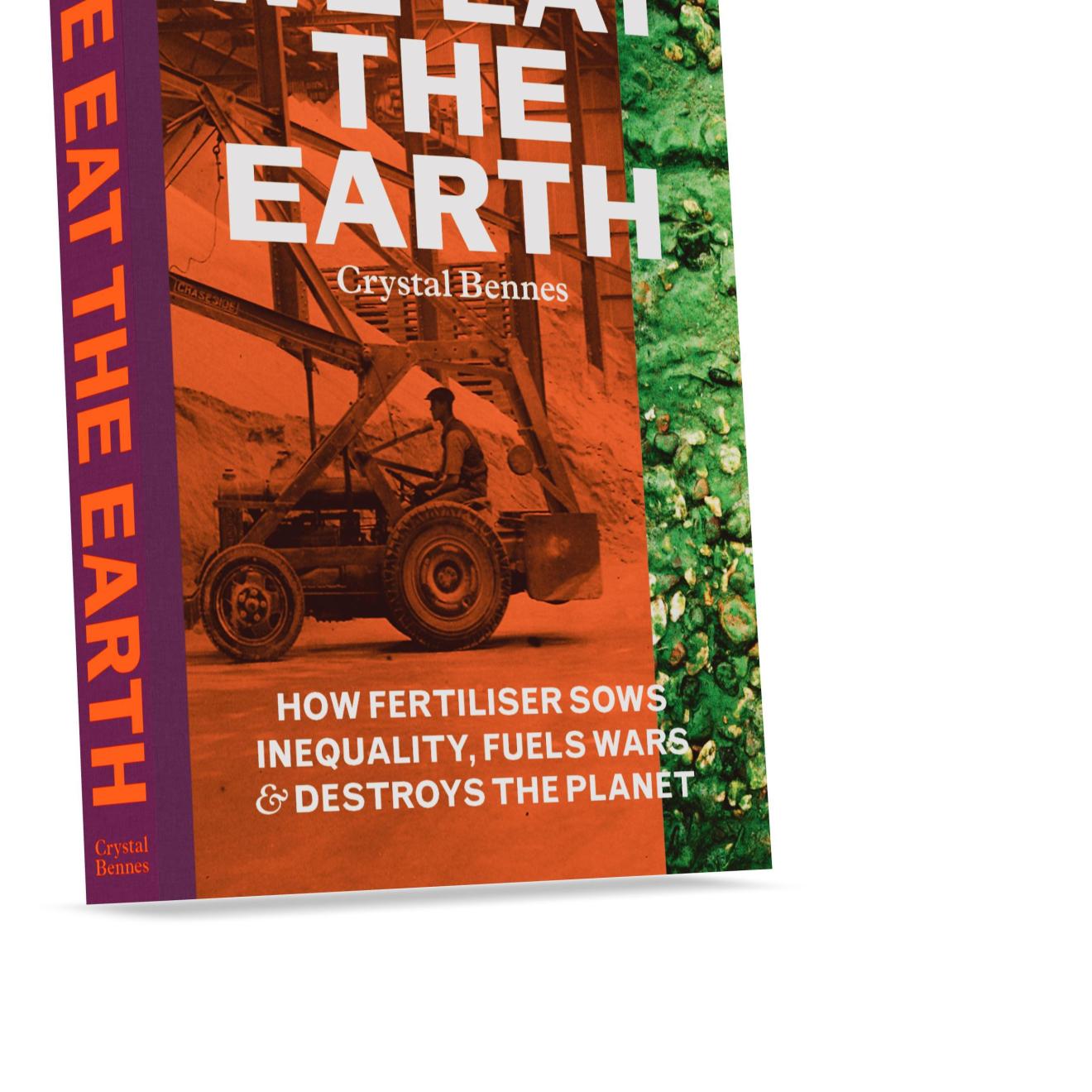
Currently, the focus is on the book We Eat the Earth – How Fertiliser Sows Inequality, Fuels Wars & Destroys the Planet by Crystal Bennes. This exhibition offers an in-depth look at the book, exploring its design, concept, creative choices and materials used.
‘We Eat the Earth’ explores how our collective appetite reshapes the Earth and how the production of fertilisers required for industrial agriculture impacts our political and physical environments. From Sweden to Western Sahara, from England to occupied Palestine, from Germany to the Netherlands. Artist and researcher Crystal Bennes maps the material flows of nitrogen, potassium, and phosphate fertilisers between eight key sites.
Among other things, the book shows how nitrogen fertiliser alone accounts for around 5% of global greenhouse gas emissions. Widespread fertiliser use contributes to soil degradation, water pollution, and environmental destruction. Finally, the project offers a hopeful perspective by highlighting farmers committed to producing food without the use of fertiliser.
Would you like to have a sneak peek at the book? Take a look online.